
Every entrepreneurial journey is built on uncertainty. Whether it’s launching a product, hiring your first team member, or pivoting your business model — risk is always part of the equation.
But here’s the truth: successful entrepreneurs don’t avoid risk — they manage it strategically.
This guide will help you understand your personal risk tolerance, how to make better decisions under pressure, and how to take smarter risks that support sustainable business growth.
What Is Risk Tolerance?
Risk tolerance is your ability — both emotional and financial — to endure uncertainty, volatility, and possible loss.
In entrepreneurship, it shows up in:
- Quitting a steady job
- Spending your savings to launch
- Launching without full product validation
- Entering competitive markets
- Raising or investing capital
It’s not about being fearless. It’s about knowing your limits and planning accordingly.
Step 1: Know Your Risk Profile
Ask yourself:
- How do I react to financial setbacks?
- Am I comfortable making decisions with incomplete data?
- Do I panic easily, or stay calm under stress?
- Can I recover emotionally (and financially) from failure?
You can also take formal assessments like the Entrepreneurial Risk Tolerance Scale (ERTS) or use investor-style profiling quizzes.
Step 2: Understand the Types of Risk in Business
There are several categories of risk — and each requires a different management strategy.
1. Financial Risk
Investing your savings, losing clients, running out of runway.
Solution:
- Build a cash buffer
- Track burn rate and break-even points
- Separate personal and business finances
2. Market Risk
What if people don’t want what you’re selling?
Solution:
- Validate ideas with MVPs
- Conduct market research
- Track trends and competitor behavior
3. Operational Risk
Your systems, team, or tech may fail.
Solution:
- Create SOPs
- Use reliable tools
- Cross-train team members
4. Reputational Risk
Bad PR, poor customer reviews, unethical practices.
Solution:
- Set brand guidelines
- Respond transparently
- Monitor feedback closely
5. Legal or Compliance Risk
Fines, lawsuits, or business shutdowns due to violations.
Solution:
- Consult with legal advisors
- Stay updated on industry regulations
- Keep contracts and terms of service airtight
Step 3: Reframe Risk as Opportunity
Every risk holds potential upside. Entrepreneurs who succeed learn to reframe risk as an investment in growth.
Ask:
- “What’s the upside here?”
- “What will I learn, even if it doesn’t work?”
- “What’s the cost of inaction?”
Often, the biggest risk is doing nothing and falling behind.
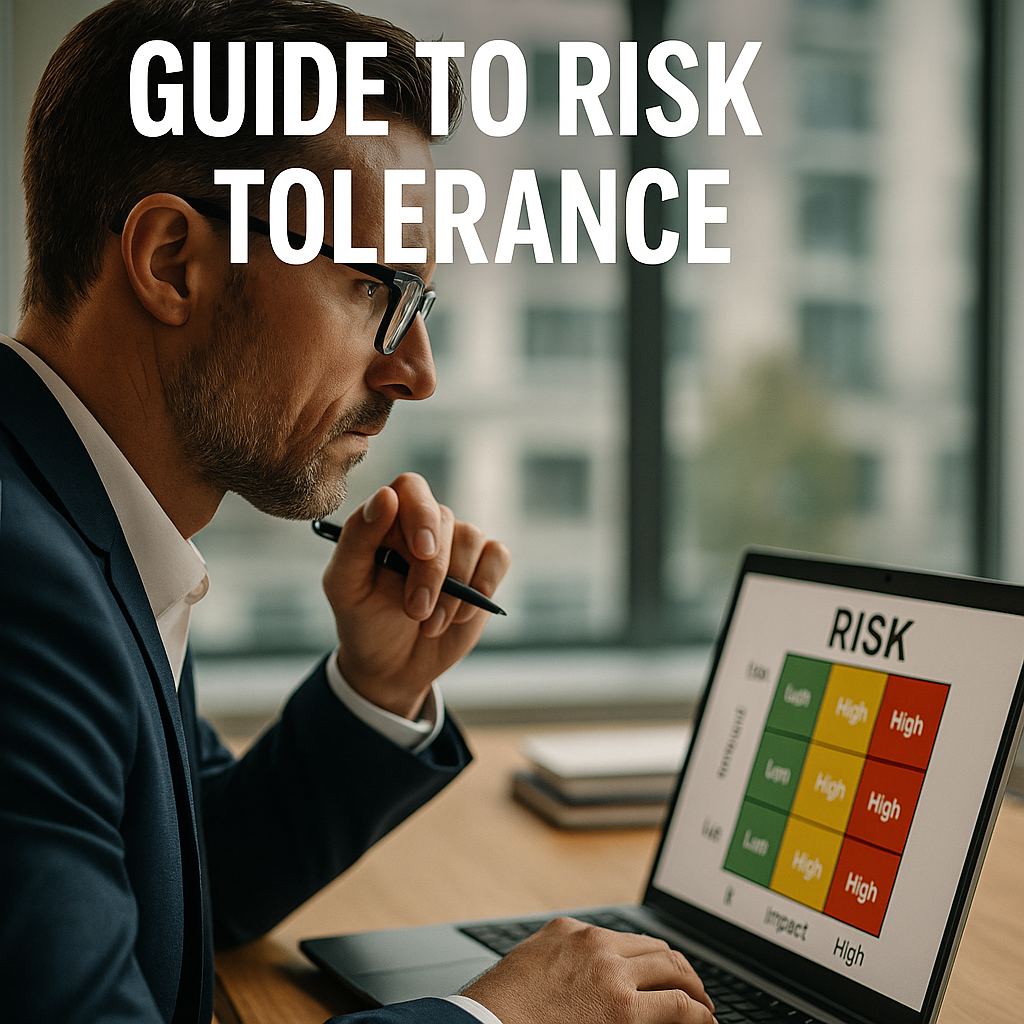
Step 4: Use the Risk Matrix Framework
Try this simple tool:
| Likelihood | Impact | Action |
|---|---|---|
| Low | Low | Ignore or monitor |
| High | Low | Minimize or automate |
| Low | High | Plan for contingencies |
| High | High | Avoid or heavily manage |
This helps you prioritize which risks deserve attention and which can wait.
Step 5: Build a Risk Management Habit
Make it part of your weekly or monthly workflow:
- Review financial health
- Reassess customer feedback
- Check metrics and forecasts
- Evaluate new initiatives against your risk profile
High-risk decisions shouldn’t be impulsive — they should be intentionally weighed and monitored.
Step 6: Use Risk as a Competitive Advantage
Many people avoid risk — which means when you take calculated risks, you gain:
- First-mover advantage
- Faster learning cycles
- Stronger differentiation
Example:
Companies like Uber, Airbnb, and Tesla succeeded not because they avoided risk — but because they moved into high-risk, high-reward spaces others feared.
Final Thought: Courage Isn’t the Absence of Risk — It’s the Willingness to Act Despite It
You’ll never eliminate risk entirely. And that’s okay. What matters is your ability to navigate it with:
- Self-awareness
- Strategy
- Structure
- Resilience
If you build your business like a high-performing pilot — always prepared, always analyzing, and always adjusting — you won’t just survive risk. You’ll leverage it to thrive.